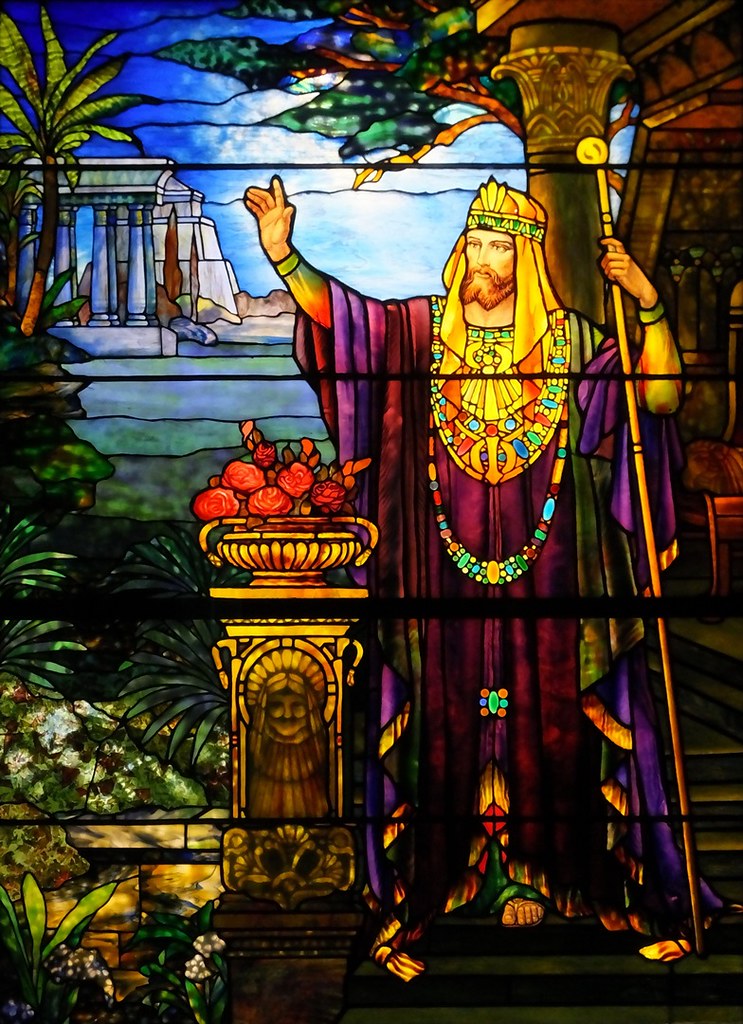
There is no direct contemporary inscription that spells out ““Solomon”” and names him as king of Israel. What we have are a handful of indirect references that, together with the biblical narrative, make a strong case that a united monarchy existed in the 10th century BCE and that a king named Solomon—most likely the son of David—was a real historical figure. Scholars therefore accept Solomon’s existence, but the details of his reign (length of rule, building projects, political relationships, etc.) remain largely a matter of biblical tradition rather than hard archaeology.
- The biblical picture Primary sources – 1 Kings 1–11 and 2 Chronicles 1–9 give the most detailed account of Solomon’s reign: 40 years, construction of the Temple in Jerusalem, diplomatic marriages, trade agreements, and the famous ““wisdom”” anecdote.
Historical context – The biblical narrative places Solomon in a period of relative peace and prosperity, after the unification of the Israelite tribes under David. - What the archaeological record actually shows
Source What it says Relevance to Solomon
Tel Dan Stele (c. 9th c. BCE) ““…the house of David…”” Confirms a Davidic dynasty; the ““house of David”” would have included Solomon’s reign.
Mesha (Moabite) Stele (c. 840 BCE) Mentions a ““king of Israel”” who built a temple; also names a ““king of Judah.”” The ““king of Israel”” is usually identified with Solomon (or his immediate successor), and the temple referenced is often taken to be Solomon’s Temple.
Amarna Letters (c. 1350 BCE) Refer to a ““king of Israel”” and a ““king of Judah”” as vassals of Egypt. The letters predate Solomon but establish that Israel had a king; the tradition of a single ruler in the 10th c. BCE would have followed.
Egyptian inscriptions (e.g., the ““Tomb of the Kings”” at the ““Temple of Solomon””?) Mention ““the king of Israel”” and ““the king of Judah”” in tribute lists. Again, no name, but they confirm the political reality of a united monarchy.
Assyrian annals (Shalmaneser III, Tiglath‑Peri‑Šin I, etc.) Record campaigns against Israel and Judah, naming kings such as Ahab (Israel) and Jehoash (Judah). These later kings were descendants of Solomon; the earlier period is inferred.
Siloam inscription (1st c. BCE) Describes the construction of a tunnel by ““the king of Judah.”” Not contemporaneous with Solomon but shows that the tradition of a Jerusalem temple persisted.
No direct inscriptions naming Solomon No surviving stela, tablet, or monument that says ““Solomon, king of Israel.”” The lack of a direct attestation is typical for 10th‑century BCE Near Eastern kings; many reigns are known only from later sources.
Bottom line on the evidence Indirect confirmation: The Tel Dan Stele and Mesha Stele, together with the biblical record, give a coherent picture that a king named Solomon ruled in the 10th c. BCE and that he built a temple in Jerusalem.
No direct mention: No contemporary inscription or monument names Solomon; this is not unusual for the period. - Scholarly consensus
View Evidence cited Comments
Solomon was a historical king Tel Dan, Mesha, biblical chronology, architectural remains of later Jerusalem (Temple Mount, City of David). Most historians accept a historical David–Solomon dynasty, though the biblical details are likely embellished.
Solomon’s reign is largely legendary Lack of direct inscriptions, inconsistencies in biblical chronology, absence of contemporary records. Some scholars argue the biblical account is a later construction that retrofits a unified monarchy.
Mixed view Recognizes the existence of a united monarchy but treats the specifics of Solomon’s reign as partly mythic. This is the most common position among biblical archaeologists. - How historians use the evidence Chronology – The biblical dates (e.g., 931 BCE start of David’s reign, 890 BCE start of Solomon’s reign) are calibrated against the Tel Dan Stele and Assyrian annals.
Political structure – The ““house of David”” reference supports the idea that a dynastic line existed.
Architectural heritage – The later Temple (Second Temple period) was built on the same site; the ““Temple of Jerusalem”” is a continuous tradition that likely began with Solomon.
Economic and diplomatic networks – The biblical list of trade partners (Edom, Phoenicia, Tyre, etc.) aligns with the trade evidence from the 10th c. BCE and later periods. - Take‑away Historical existence – Scholars generally agree that Solomon was a real king, part of a united Israelite monarchy that existed in the 10th century BCE.
Detail uncertainty – The specific details of his reign (length, building projects, wisdom, wealth) are largely derived from biblical tradition and are not independently corroborated by contemporary inscriptions.
Archaeological status – No direct archaeological artifact names Solomon; the evidence is indirect but persuasive when combined with the biblical narrative.
Quick reference
Evidence What it tells us Why it matters
Tel Dan Stele ““House of David”” Confirms a Davidic dynasty → Solomon likely part of it
Mesha Stele ““King of Israel”” built a temple Suggests Solomon’s temple existed
Amarna Letters ““King of Israel”” vassal Shows Israel had a king before Solomon
Egyptian & Assyrian annals Lists of Israelite kings Provide a broader political context
No direct inscription None Typical for 10th‑c. BCE kings; not a fatal flaw
Bottom line: While we cannot point to a single inscription that reads ““Solomon, king of Israel,”” the convergence of biblical tradition, later inscriptions, and archaeological context gives historians a solid foundation to treat Solomon as a historical figure, even if many of the finer details remain part of the biblical narrative rather than the archaeological record.