History of the Peace sign.
The hippies’ peace sign is one of the most enduring and recognisable symbols of the 20th century. Its history is not just a story about a gesture; it is a narrative of generational protest, cultural upheaval, and the fight for non-violence.
To fully understand its history, we must examine the symbol in three phases: its ancient roots, its anti-establishment revival in the 1960s, and its eventual global commercialisation.
Phase 1: The Ancient and Early Origins (Before the 1960s)
The simple act of raising two fingers (the V sign) has roots far predating the hippie movement.
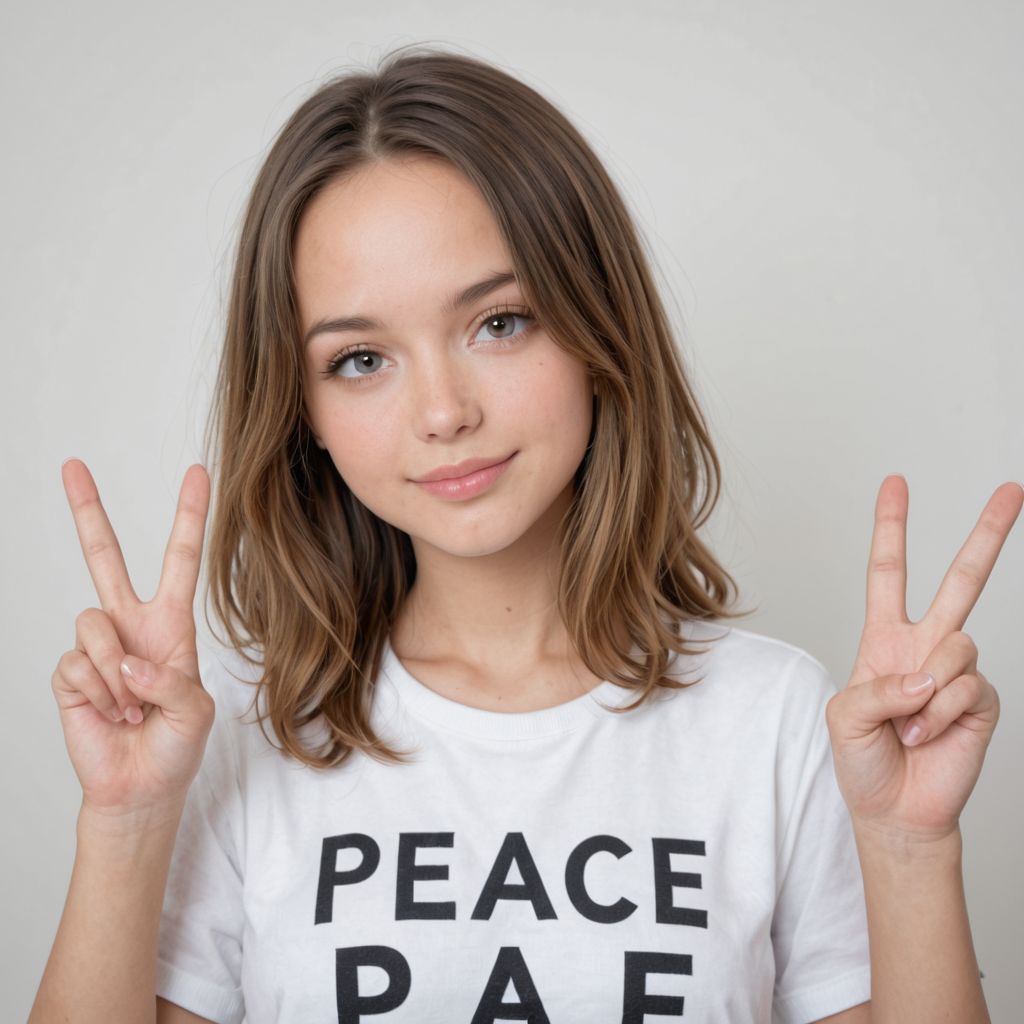
- The Victory Sign: In its most basic form, the V-sign has been used universally to signify Victory. The association solidified during World War I and II, where soldiers used it on propaganda posters and in combat to celebrate victories. This made the sign an immediate, powerful, and politically charged gesture.
- Civil Rights and Activism: Even before the hippie era, the sign was adopted by major civil rights and protest movements. It served as a non-violent, easily understood symbol of solidarity and defiance against unjust systems.
Phase 2: The Counterculture Transformation (The 1960s)
The 1960s are the period when the gesture transformed from a general symbol of “Victory” into the specific, culturally charged meaning of “Peace.”
The Anti-War Movement
The primary catalyst for the hippie adoption was the Vietnam War. As the war raged, anti-war sentiments swelled in Western nations. The hippies and other counterculture figures saw the war and the military-industrial complex as fundamentally corrupting and violent.
In this context, the symbol gained a new, immediate meaning: “No War.”
• The Shift in Meaning: The message shifted from “Victory over the enemy” to “Victory for peace.” The fingers became a silent declaration of opposition to violence and a commitment to peace, love, and communal living.
• Symbol of Solidarity: The sign became an instant form of dress code or uniform for the movement—it signalled affiliation, shared values, and opposition to the mainstream, rigid culture. It was worn on clothing, painted on signs, and flashed on every corner.
The “Flower Power” Movement
The symbolism was inextricably linked to “Flower Power,” which emphasized naturalism, anti-materialism, and a return to simple, harmonious living. The sign perfectly encapsulated this ethos: it was simple, universal, non-violent, and accessible to anyone, regardless of background or wealth.
Phase 3: The Modern Icon and Legacy (Post-1970s)
As the counterculture energy faded and the generation moved into mainstream life, the symbol did not disappear; it was absorbed and commodified.
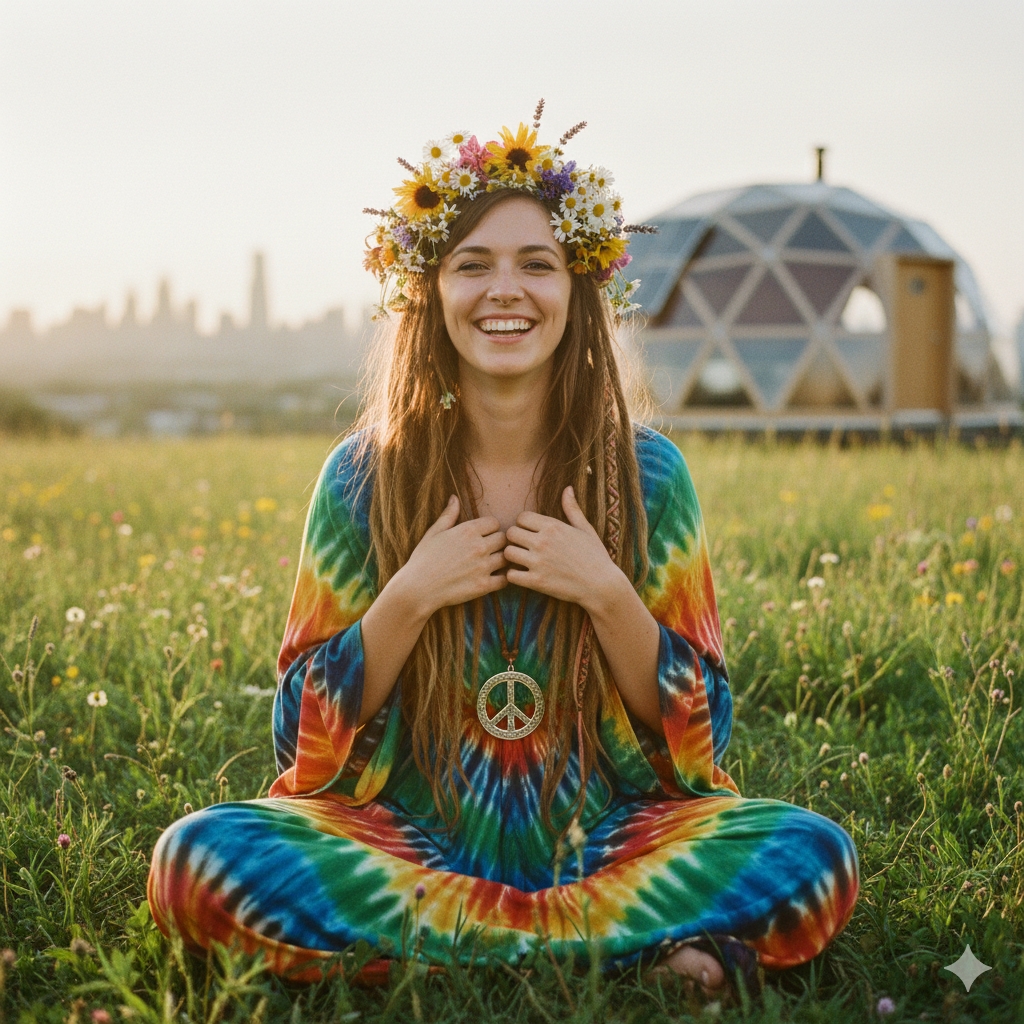
- Pop Culture Integration: The hippies’ original power lay in its defiance. Once the movement was over, the symbol needed a new life. It became heavily adopted by music culture (especially rock festivals), fashion, and art. Its association with the 60s became a nostalgic brand identity.
- The Spread of the Graphic Symbol: Over time, the hand gesture (the V sign) was often accompanied by a specific, stylised graphic symbol: a circle surrounding the fingers, or a stylised triskelion pattern. While the original hand sign was spontaneous and organic, the formalised graphic symbol helped standardise its use for T-shirts, posters, and media.
- Enduring Meaning: Although the symbol is now used in everything from jewellery to commercial advertising, its original cultural charge remains—a reminder of the ideals of non-violence and social justice.
Summary
Period
Primary Meaning
Context/Movement
Function
Ancient/Early 20th Century
Victory (V)
Military, Civil Rights
A declaration of triumph or rights.
1960s (Hippies)
Peace, Anti-War
Counterculture, Vietnam Protests
A radical, non-violent declaration of protest.
Post-1970s to Today
Peace, Universal Love
Fashion, Pop Culture, Activism
A global, aesthetic symbol of non-violence and idealism.
Tie-dye fashion is not inherently a symbol of peace, but it became deeply entwined with the culture, aesthetics, and values of the hippie and counterculture movements—which, in turn, were movements dedicated to peace and social change.
Here is a breakdown of the symbolic connection between the two.
The Symbolic Connection: Anti-Establishment Aesthetics
The tie-dye look flourished in the late 1960s and 1970s precisely because it was an aesthetic antithetical to the formal, rigid, and uniform structures of the military-industrial complex and mainstream American life.
The connection to “peace” is found in the principles that the fashion embodied:
- The Value of the Handmade and Organic
The most significant connection is the move away from mass production.
• What the establishment sold: Perfectly manufactured, uniform, predictable, and machine-made goods (reflecting conformity).
• What tie-dye represented: Imperfection, spontaneity, and human effort. Tie-dyeing requires a physical process, human skill, and chemical experimentation. This emphasis on the handmade resonated with the counterculture’s general ethos of rejecting consumerism and embracing self-sufficiency—a core tenet of the peace movement. - Chaos vs. Order (Spontaneous Freedom)
Tie-dye patterns are unpredictable. You cannot precisely replicate one pattern; it is a beautiful accident.
• The symbolism: This randomness reflected a spirit of freedom and liberation. The movement was seeking freedom from the rigid “order” and constraints of traditional society, military service, and capitalist expectations. The unpredictable, vibrant burst of colour symbolized a chaotic, joyful, and free spirit. - Communal and Natural Focus
The aesthetics of the time—including the clothing (flowing fabrics, natural dyes, fringe, tie-dye)—were tied to a focus on nature, spirituality, and communal living. The movement sought a natural, harmonious existence, directly opposite to the perceived artificiality and violence of modern society.